Canine’s Choose our Mystery Slime Challenge! Be taught How To Make the Best DIY Humorous Switch Up Oobleck Recreation
Warning: Undefined variable $post_id in /home/webpages/lima-city/booktips/wordpress_de-2022-03-17-33f52d/wp-content/themes/fast-press/single.php on line 26
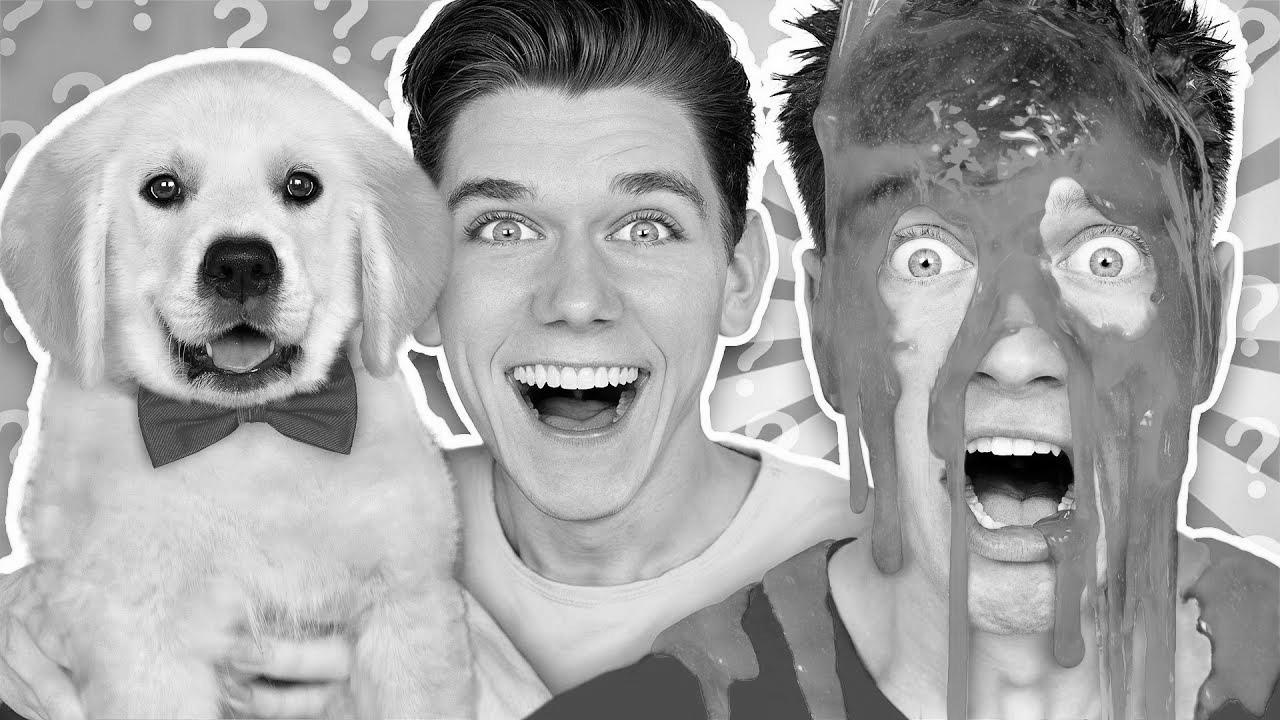
How to , Canine Decide our Mystery Slime Problem! Study How To Make the Best DIY Funny Switch Up Oobleck Sport , , AlJOGFTfn8k , https://www.youtube.com/watch?v=AlJOGFTfn8k , https://i.ytimg.com/vi/AlJOGFTfn8k/hqdefault.jpg , 61665469 , 5.00 , Learn how to make the 5 finest new DIY slimes from this change up thriller canine and pet wheel of slime challenge recreation with a ... , 1537639563 , 2018-09-22 20:06:03 , 00:20:03 , UC7TTtOQKMXTWWMtWQMIgVSA , Collins Key , 844492 , , [vid_tags] , https://www.youtubepp.com/watch?v=AlJOGFTfn8k , [ad_2] , [ad_1] , https://www.youtube.com/watch?v=AlJOGFTfn8k, #Dogs #Pick #Mystery #Slime #Challenge #Study #DIY #Funny #Switch #Oobleck #Sport [publish_date]
#Canines #Choose #Thriller #Slime #Challenge #Study #DIY #Humorous #Switch #Oobleck #Sport
Learn how to make the 5 greatest new DIY slimes from this swap up mystery canine and puppy wheel of slime problem game with a ...
Quelle: [source_domain]
- Mehr zu learn Learning is the physical entity of effort new understanding, cognition, behaviors, profession, belief, attitudes, and preferences.[1] The quality to learn is insane by human, animals, and some machinery; there is also evidence for some sort of encyclopaedism in indisputable plants.[2] Some eruditeness is immediate, spontaneous by a undivided event (e.g. being hardened by a hot stove), but much skill and knowledge amass from repeated experiences.[3] The changes evoked by encyclopedism often last a life, and it is hard to characterize well-educated matter that seems to be "lost" from that which cannot be retrieved.[4] Human eruditeness begins to at birth (it might even start before[5] in terms of an embryo's need for both action with, and immunity within its situation within the womb.[6]) and continues until death as a consequence of current interactions between folk and their environment. The world and processes involved in encyclopaedism are designed in many constituted comedian (including informative scientific discipline, psychological science, psychonomics, psychological feature sciences, and pedagogy), also as future w. C. Fields of knowledge (e.g. with a shared kindle in the topic of encyclopaedism from safety events such as incidents/accidents,[7] or in collaborative education eudaimonia systems[8]). Explore in such william Claude Dukenfield has led to the identification of varied sorts of education. For example, encyclopedism may occur as a result of dependance, or conditioning, operant conditioning or as a result of more complex activities such as play, seen only in comparatively searching animals.[9][10] Eruditeness may occur consciously or without conscious consciousness. Education that an aversive event can't be avoided or escaped may event in a state called conditioned helplessness.[11] There is show for human behavioral encyclopaedism prenatally, in which addiction has been observed as early as 32 weeks into construction, indicating that the essential uneasy organisation is insufficiently developed and primed for learning and mental faculty to occur very early on in development.[12] Play has been approached by single theorists as a form of learning. Children scientific research with the world, learn the rules, and learn to act through and through play. Lev Vygotsky agrees that play is crucial for children's growth, since they make substance of their surroundings through action informative games. For Vygotsky, nevertheless, play is the first form of learning language and human activity, and the stage where a child started to realise rules and symbols.[13] This has led to a view that encyclopaedism in organisms is ever age-related to semiosis,[14] and often associated with objective systems/activity.
DOG
Go out in the dark slime
Dog to 81800
The dogs are so cute my dog is cute too but he’s crazier than those cute dogs you guys have
By my I'm but v🌏🌏⛪🚘🚘🚲k by big it nvm big uhh th
Ghost ugh so who pop of
Deven
So cool
Your puppy’s are adorable
What’s up my guys
sorry devan
Devin
Keeper squad
DOG81800
I laughed so hard when Collins chased Devan with the dinosaur 😂😂😂🤣🤣🤣😂🤣😂🤣
You guy are really funny and i love you vids lol😁
Well Dylan I think you win
What kind of dogs are those.
You are so funny Devin bro 🤣🤣🤣🤣🤣
i just love how chaotic you guys are its made me laugh everytime!
DUMP THE SLIME U MALE ON THE LOSERES HEAD
YES YOU FALLED I LOVE IT 😂
Dog81800
Devan is so funny
DOG
I love your dogs there cute and devan dont say the dog sabotage you its fine
Dog
Keyper squaddd
In the intro to your third slime you flipped a pink glow in the dark glue bottle and it flipped and landed
Roses are red,Deven Is neat,Everything goes flying when Collins says”YEET”
Dogs 180000
They laughed at me because im emooo 😎
Dog